ByteDance’s Seaweed: Exploring New Frontiers in AI Video Generation

ByteDance (TikToK) has introduced Seaweed, an AI video generation model that enables users to create short videos from text descriptions or images. Available through platforms like GoEnhance and Pollo AI, Seaweed offers tools for crafting brief, dynamic video clips.It can generate videos in real-time at resolutions up to 2K and 24 FPS (considerably higher than the competition).

Like with most other video generation tools, users can input a prompt or upload an image to generate a 5-second video, with options to adjust resolution and aspect ratio, but Seaweed can also generate videos from audio files and excels in creating videos with synchronized lip movements and speech rhythms. It also supports coherent single-shot and multi-shot long videos maintaining consistency in characters, style, and environment.
Claude Gets Smarter with Research Tool and Google Workspace Support

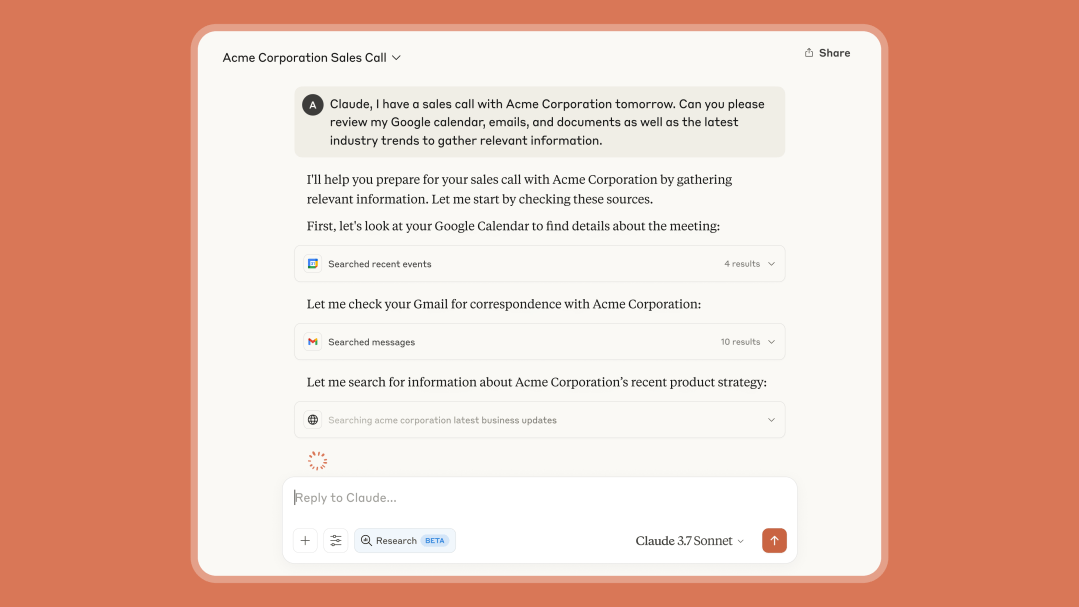
Claude’s new Research tool is bringing a helpful upgrade to how the AI assistant handles information gathering. Unlike ChatGPT’s basic web browsing, Claude can now perform multiple search queries on a single topic, working through complex questions step by step. This means more accurate answers with proper citations so you know where the information is coming from. If you’re trying to understand a complicated news story or researching a hobby project, Claude can now dig deeper and explain things more thoroughly.The Google Workspace integration means Claude can now work with your Gmail, Calendar, and Google Docs—something that sets it apart from many competitors. Need help making sense of your cluttered inbox? Claude can summarize important emails. Feeling overwhelmed by meeting notes? It can pull out the key action items. Claude can even understand the context of your documents to provide more relevant assistance. These updates make Claude more useful for everyday tasks while keeping the friendly, thoughtful approach that users appreciate. Learn More

SlidesAI: Turning Text into Presentations, Effortlessly

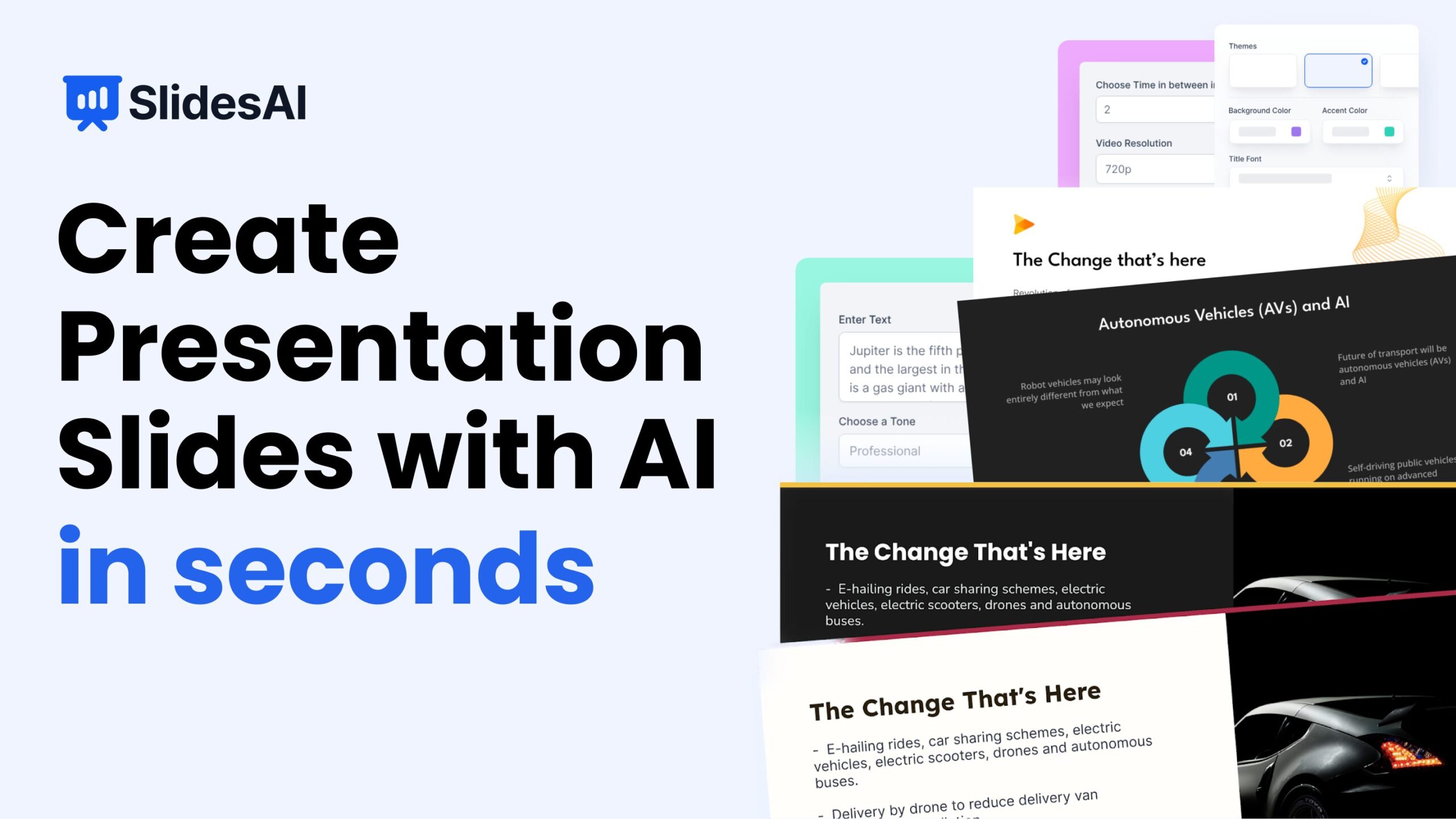
SlidesAI offers a straightforward way to turn written content into presentation slides without needing design skills. What makes it stand out from other AI slide generators is how it focuses on clarity and simplicity—you just paste your text, pick a tone, and it suggests a complete slide layout. No logging into complicated design tools, no starting from scratch.While many tools focus heavily on visuals, SlidesAI keeps things clean and readable, which is helpful for people who want to get their message across without spending hours adjusting fonts and animations. It’s a time-saver, especially for students, educators, and business professionals looking to present ideas quickly. You can explore it at slidesai.io.

Pollo AI: A Versatile Hub for Creative Video Generation

Pollo AI offers a user-friendly platform that brings together multiple AI models for video and image creation. Users can generate content by providing text prompts, images, or videos, and customize outputs with various styles and effects. The platform supports features like consistent character animation and video style transfers, allowing for a range of creative possibilities. What sets Pollo AI apart is its integration of diverse AI models, such as Kling AI, Runway, and Vidu AI, within a single interface. This consolidation simplifies the creative process by eliminating the need to navigate multiple platforms. Users can experiment with different models to achieve desired results, making it a practical choice for those looking to explore AI-generated content without extensive technical knowledge. For more information, visit Pollo AI.

OpenAI’s Sora: Unlimited Creative Videos Now Available for Plus Users

OpenAI has expanded access to Sora, their text-to-video AI tool, giving Plus subscribers unlimited video generation capabilities while free users receive limited access. This update marks a significant shift from the previous waitlist system, democratizing access to this powerful creative tool that transforms simple text prompts into realistic videos up to 60 seconds long.

What makes this update special compared to similar offerings like Runway or Pika is the combination of Sora’s renowned quality with newfound accessibility. While competitors often maintain strict access controls or charge per generation, OpenAI has opted for a subscription model that allows unlimited creative experimentation for Plus members ($20/month). The free tier access, though limited, also opens the door for casual users to explore video generation without financial commitment—making advanced AI video creation accessible to everyday creators rather than just professionals or developers.

MidJourney’s Omni Reference: A New Approach to Visual Consistency

MidJourney’s latest feature, Omni Reference, offers users a method to maintain visual elements across multiple images. By allowing the inclusion of a specific reference image, users can guide the AI to incorporate particular characters or objects into new creations. This approach provides a level of consistency that can be beneficial for projects requiring uniformity in visual elements.What sets Omni Reference apart is its adaptability. Users can adjust the influence of the reference image, balancing between preserving specific details and allowing creative variation. This flexibility supports a range of applications, from storytelling to design, where maintaining certain visual aspects is important. Learn more

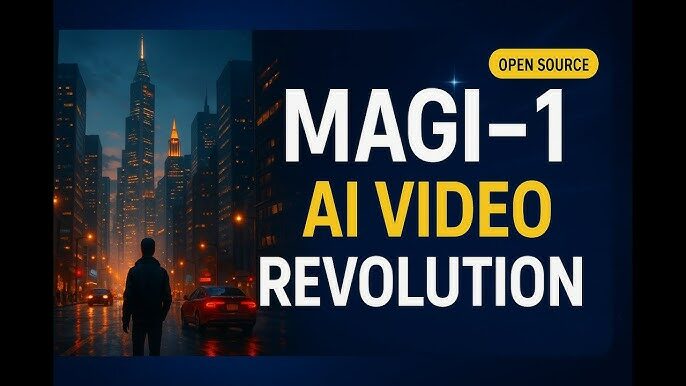
Exploring MAGI-1: A New Open-Source Video Generation Tool

SandAI has introduced MAGI-1, an open-source tool designed to generate videos from text prompts. Unlike traditional methods that process entire videos at once, MAGI-1 creates videos in smaller segments, allowing for more manageable and efficient generation. This approach aims to provide users with a flexible way to produce videos that align with their creative vision. MAGI-1 supports various input types, including text descriptions, images, and existing videos, offering users multiple avenues to create or enhance video content. The tool is available on platforms like Hugging Face and GitHub, making it accessible for those interested in exploring its capabilities. For more information and to try out MAGI-1, you can visit their Hugging Face page or GitHub repository. Learn more.

Claude 4: A New Chapter in AI Assistance

Anthropic has introduced Claude 4, featuring two new models: Claude Opus 4 and Claude Sonnet 4. These models which can code, reason, and support agentic capabilities better than ever before, are designed to handle complex tasks and offer improved performance in various applications. Claude Opus 4 is tailored for more demanding tasks, while Claude Sonnet 4 serves as a versatile option for everyday use.

A notable feature of these models is their ability to switch between quick responses and more in-depth, step-by-step reasoning. This flexibility allows users to choose how they interact with the AI based on their specific needs. These new AI agents should unlock new opportunities for people to optimize how they work, develop products, and even build their own startups.For more details, you can visit Anthropic’s official announcement: Introducing Claude 4.

Lights, Camera, AI – Google’s New VEO 3 Creative Tools Step Up the Game

If you’ve ever played with AI-generated videos or images and felt something was missing—like sound that actually fits the scene or more natural camera movement—Google’s latest update might catch your eye. At its recent I/O event, Google rolled out a wave of creative upgrades, including VEO 3, which now lets you generate very high quality videos with synced sound effects, background audio, and even character dialogue. That’s a major step forward from other tools that leave users stitching things together manually.

What sets this update apart is how it brings everything under one roof. Their new FLOW platform combines tools so you can shape scenes, characters, and styles just by describing them in everyday language. Paired with updates to IMAGEN 4 for sharper image quality and text, and tools for consistent video editing in VEO 2, Google’s suite seems focused on making creativity more intuitive—even for those without a film or design background. That’s the good news. The bad news is that while VEO 3 has been released, it is proving to be rather inconsistent (buggy), many of the key features are not yet implemented, and worst of all, it costs $250 per month! Learn more here

Create Realistic Videos Without a Camera

Mirage Studio by Captions.ai offers a straightforward way to produce videos featuring lifelike digital actors. By simply uploading an audio file or entering a script, users can generate videos with virtual actors that exhibit natural expressions and gestures. This approach eliminates the need for traditional filming equipment and setups, making video creation more accessible.

What distinguishes Mirage Studio from other AI video tools is its ability to create consistent digital personas that can be reused across various content pieces. It is also cheaper than similar tools like HeyGen ($9.9 vs $29/month). Users can either upload a reference image or describe the desired actor, allowing for customization that aligns with their brand or message. They can also generate the entire video—from script, voice, actor, to background—with just a single prompt. This feature supports the creation of cohesive content without the complexities of traditional video production.